Signs Your Asphalt Needs Repair
Recognize the warning signs that your asphalt driveway or parking area needs attention.
Alligator Cracking
Named for its resemblance to alligator skin, this pattern of interconnected cracks indicates structural failure of the asphalt. The underlying base has usually failed, often from water damage or insufficient thickness. Alligator cracking spreads quickly once it starts.
Alligator cracking can't be fixed with surface treatments alone. It indicates failure below the surface that requires removal and proper base repair before new asphalt. Catching it early limits how much must be replaced.
Potholes Developing
Potholes form when water infiltrates cracks, freezes, thaws, and breaks up the asphalt. What starts as a small rough patch grows with each freeze-thaw cycle. By the time a pothole is noticeable, significant base damage has occurred.
Potholes damage vehicles and create liability. They also indicate widespread water infiltration—where there's one pothole, more are likely developing. Address potholes and investigate the underlying cause.
Standing Water
Well-installed asphalt drains quickly. Puddles that remain for hours after rain indicate low spots where the surface has settled or worn unevenly. Standing water accelerates asphalt deterioration and increases freeze-thaw damage.
Standing water is both a symptom and a cause of asphalt failure. It indicates drainage problems that will worsen over time while simultaneously accelerating the asphalt's breakdown.
Faded Gray Color
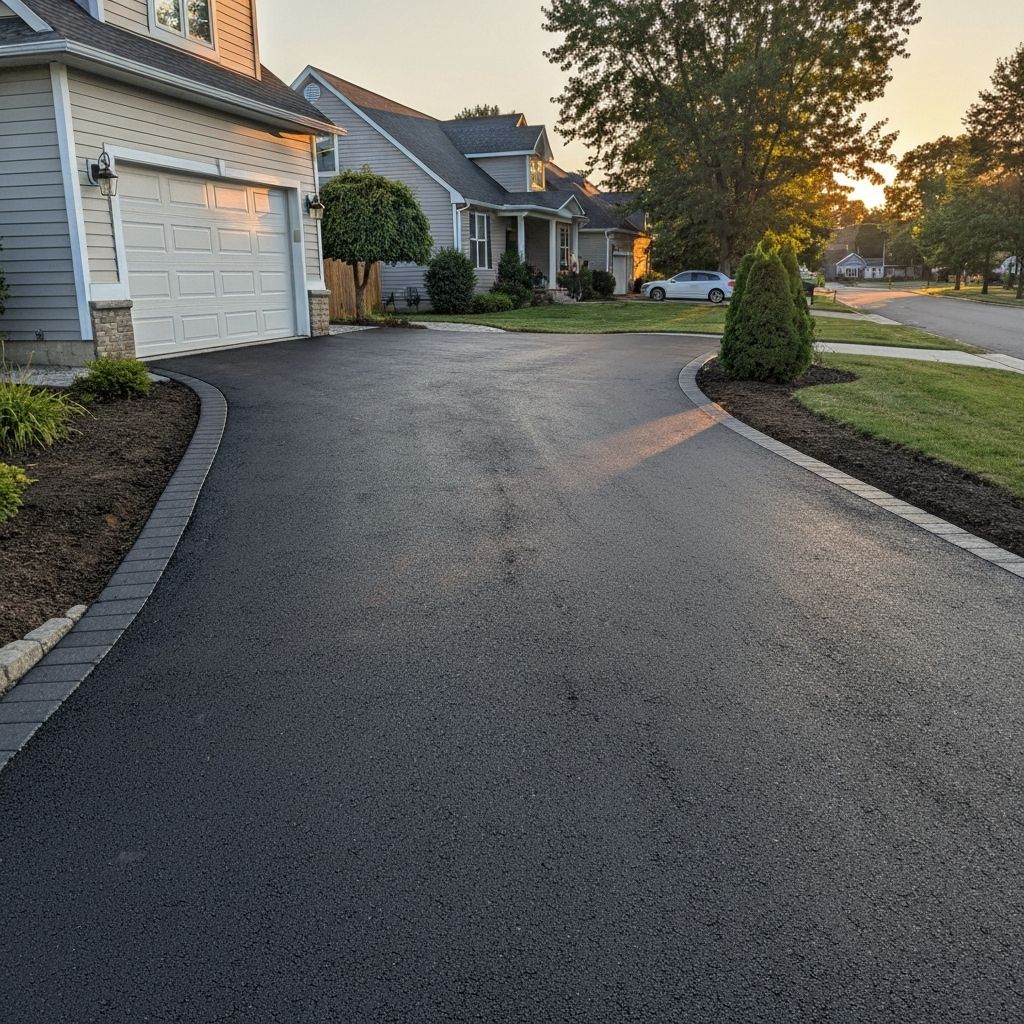
Fresh asphalt is deep black. Over time, UV exposure oxidizes the binder, turning asphalt gray. Severely faded asphalt has lost the flexibility of its binder, making it brittle and prone to cracking. Fading indicates overdue sealcoating.
Fading is the asphalt telling you its protective binder is deteriorating. While cosmetically unappealing, the real concern is structural—faded asphalt cracks more easily and deteriorates faster.
Crumbling Edges
Driveway edges experience the most stress from vehicles and weather. Crumbling, breaking edges indicate the asphalt is failing. This often starts where the driveway meets lawn and spreads inward.
Crumbling edges make your driveway narrower and less attractive. More importantly, edge failure indicates moisture infiltration and base problems that will spread to the rest of the surface.
Age and Overall Condition
Asphalt driveways typically last 15-20 years with proper maintenance, sometimes longer. If your driveway is approaching this age and showing multiple warning signs, comprehensive evaluation makes sense before investing in repeated repairs.
At some point, repairs become throwing good money after bad. A professional assessment can determine whether targeted repairs will extend useful life or whether replacement is the better investment.
Need Help With Your Asphalt Project?
Our experienced team can inspect your property and provide a free, no-obligation estimate.