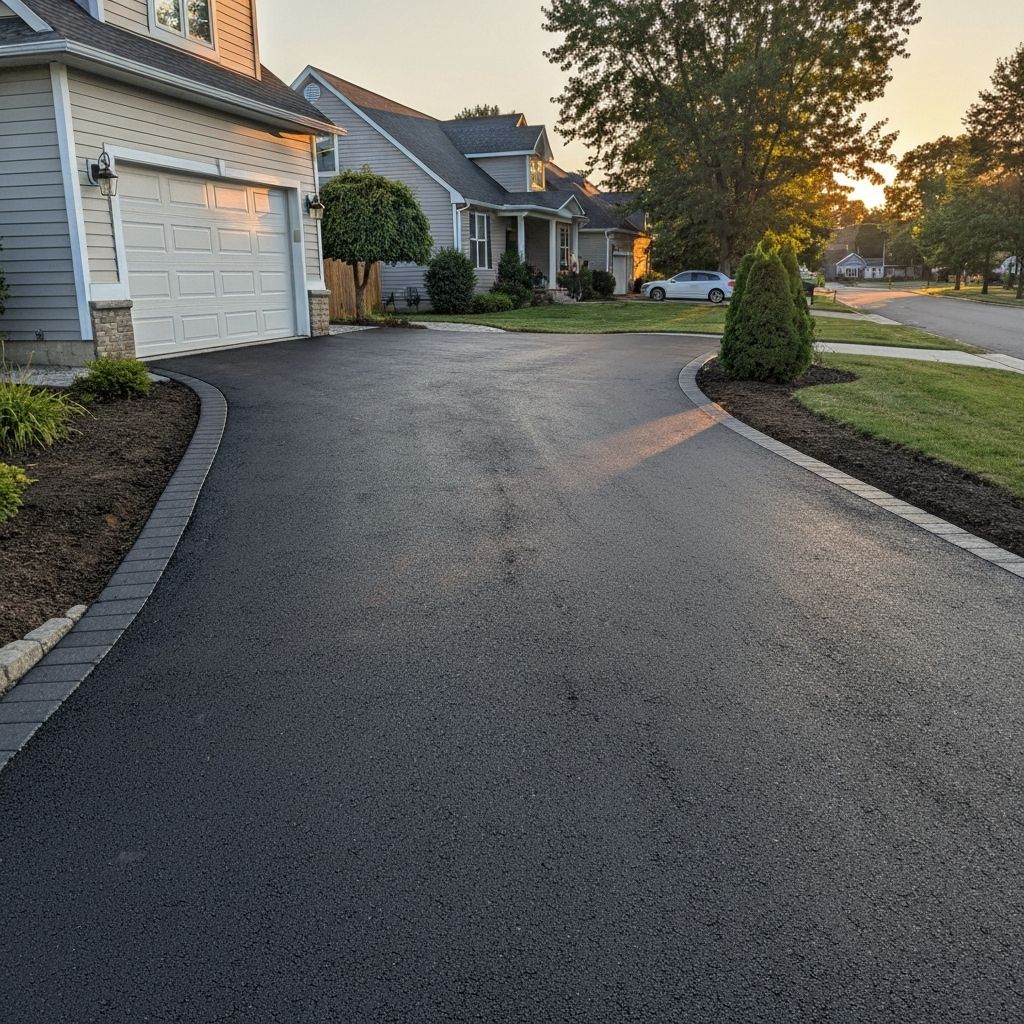
Asphalt Driveway Maintenance Guide
Keep your asphalt driveway in top condition with these maintenance tips and schedules.
Regular Cleaning
Sweep or blow debris off your driveway monthly. Remove leaves, dirt, and organic matter that can stain and deteriorate the surface. Clean oil spots promptly with a degreaser—oil softens asphalt and causes permanent damage if left untreated.
Debris holds moisture against the surface, accelerating wear. Oil stains aren't just unsightly—they break down the asphalt binder and create soft spots that crack and crumble.
Sealcoating Schedule
Sealcoating helps protect asphalt surfaces from sunlight, water intrusion, and weather exposure. The ideal maintenance schedule depends on traffic, climate conditions, and the current condition of the asphalt surface.
Routine maintenance helps extend the lifespan of asphalt surfaces and may reduce the likelihood of premature cracking or deterioration.
Fill Cracks Promptly
Address cracks as soon as they appear, ideally when they're still narrow. Clean out debris and fill with appropriate crack filler. For cracks wider than 1/2 inch, use cold patch material. Addressing cracks in fall prepares your driveway for winter freeze-thaw cycles.
Water entering cracks causes the most damage to asphalt driveways. When water freezes, it expands and makes cracks larger. One small crack can become a pothole in a single winter if ignored.
Edge Maintenance
Keep grass and vegetation trimmed back from driveway edges. Roots can undermine edges, and overhanging vegetation holds moisture. Maintain proper drainage so water flows away from, not onto, the driveway edges.
Edges are the most vulnerable part of an asphalt driveway. Without proper support, edges crumble and break off. Maintaining clear edges with good drainage extends the driveway's usable width.
Winter Care
Use plastic shovels rather than metal to avoid scraping the surface. Avoid de-icing products that contain salt or harsh chemicals—use sand for traction instead. Don't let piles of plowed snow sit on the driveway; the concentrated moisture and chemicals accelerate damage.
Winter is hardest on asphalt. Freeze-thaw cycles work water into every tiny crack. Salts and chemicals break down the binder. Gentle winter care prevents spring surprises.
Avoid Heavy Static Loads
Don't park heavy vehicles (RVs, boats, trailers) in the same spot for extended periods, especially in hot weather. Consider paver pads under kickstands and jack stands. Move parked vehicles periodically to distribute wear.
Asphalt softens in heat. Heavy loads on hot days create permanent depressions. Once your driveway develops low spots, they collect water and accelerate further damage.
Need Help With Your Asphalt Project?
Our experienced team can inspect your property and provide a free, no-obligation estimate.
Related Resources
Signs Your Asphalt Needs Repair
Recognize the warning signs that your asphalt driveway or parking area needs attention.
Crack Repair Checklist
A step-by-step checklist for evaluating and addressing cracks in your asphalt surfaces.

Seasonal Home Maintenance Checklist
A comprehensive guide to keeping your home exterior in great shape throughout the year.