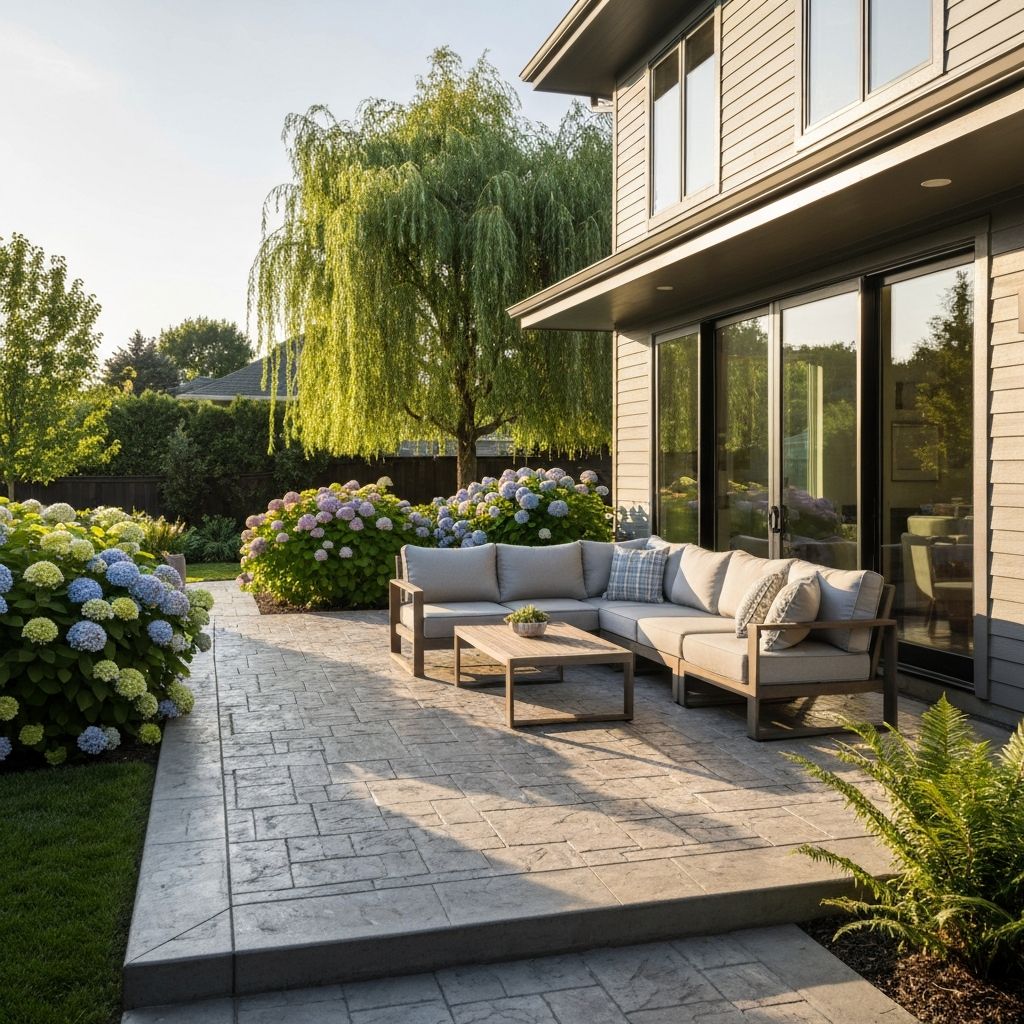
Stamped Concrete vs Traditional Concrete
Understand the differences, costs, and benefits of stamped versus traditional concrete.
Visual Appeal and Design Options
Traditional concrete offers a clean, utilitarian look with options for broom finishes or simple borders. Stamped concrete can mimic natural stone, brick, wood planks, or custom patterns with realistic textures. Colors can be integrated throughout or applied as surface stains.
Stamped concrete lets you achieve the look of expensive pavers or natural stone while offering a decorative appearance similar to natural materials. For high-visibility areas like patios and pool decks, the aesthetic upgrade often justifies the added investment.
Cost Comparison
Traditional concrete is generally more affordable than stamped concrete. Decorative stamped finishes typically require additional labor, materials, coloring, and detail work compared to standard concrete surfaces.
Stamped concrete often provides a more decorative and custom appearance, while traditional concrete offers a simpler and more economical solution. The best choice depends on your goals, style preferences, and long-term plans for the space.
Durability and Lifespan
Both traditional and stamped concrete have similar structural durability when properly installed, lasting 25-30 years or more. However, stamped concrete's textured surface can show wear in high-traffic areas, and the color sealer requires periodic reapplication.
Structurally, you're getting the same concrete either way. The difference is in surface maintenance—stamped concrete needs more attention to maintain its decorative appearance.
Maintenance Requirements
Traditional concrete requires occasional cleaning and crack sealing. Stamped concrete needs resealing every 2-3 years to protect the color and pattern. Power washing and cleaning must be done carefully to avoid damaging the decorative surface.
Factor ongoing maintenance costs into your decision. Neglecting stamped concrete maintenance leads to faded colors and worn patterns that detract from your investment.
Installation Considerations
Stamped concrete is more labor-intensive and requires specialized skills. The timing of stamping is critical—too early or late affects pattern quality. Weather conditions matter more, and the process is harder to stop and restart than traditional pours.
Choose an experienced stamped concrete contractor with a portfolio of completed projects. Stamping requires skill and timing that not all concrete contractors possess. Poor execution is permanent and obvious.
Best Applications for Each
Traditional concrete works well for driveways, sidewalks, utility areas, and spaces where function matters more than aesthetics. Stamped concrete shines on patios, pool surrounds, entryways, and outdoor living areas where appearance enhances your home's value.
Match the investment to the visibility and purpose. Stamped concrete in a backyard patio delivers daily enjoyment and boosts curb appeal, while a side utility area might not warrant the upgrade.
Need Help With Your Concrete Project?
Our experienced team can inspect your property and provide a free, no-obligation estimate.
Related Resources
Concrete Patio Planning Checklist
Everything you need to consider before starting your concrete patio project.
Signs Your Concrete Is Sinking or Cracking
Learn to identify early warning signs of concrete problems before they become major issues.
How To Maintain Decorative Concrete
Tips and best practices for keeping your decorative concrete looking great for years.