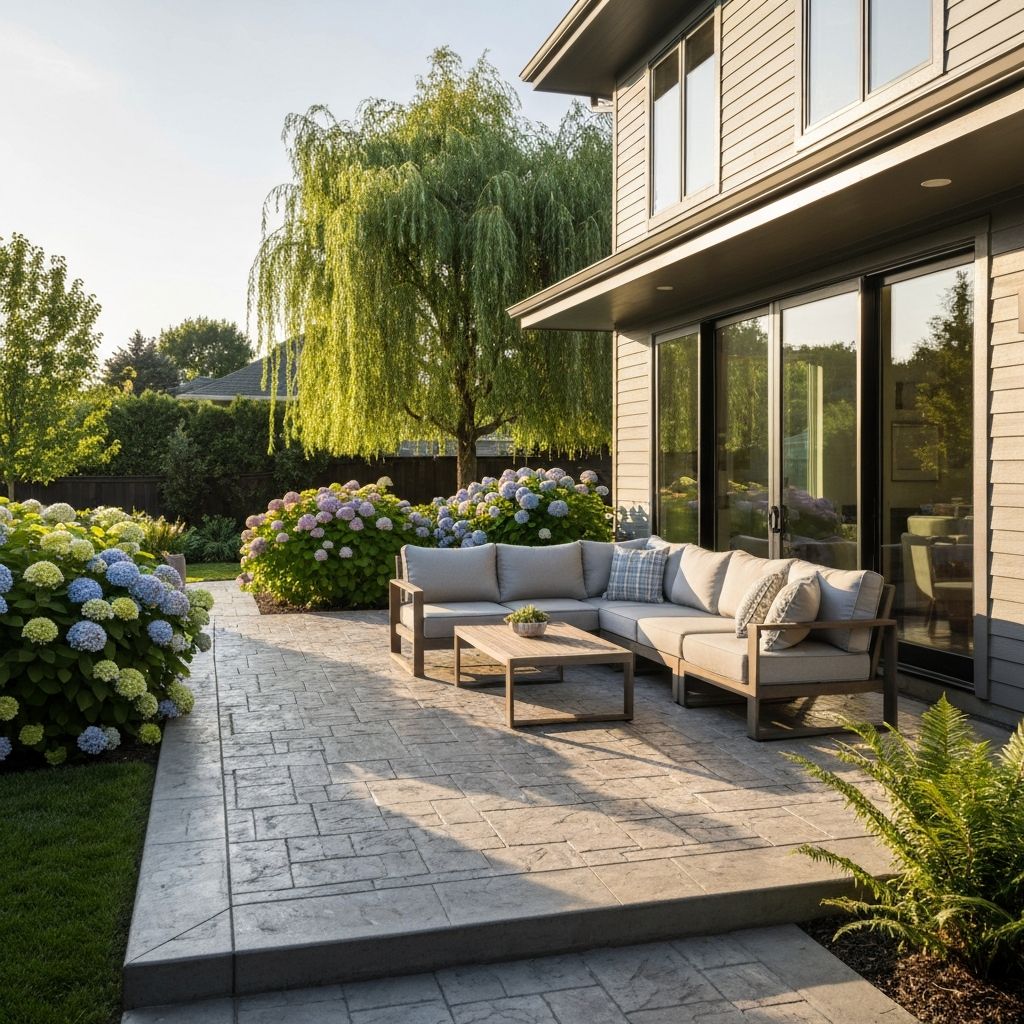
Concrete Patio Planning Checklist
Everything you need to consider before starting your concrete patio project.
Determine Your Patio's Purpose
Before sizing your patio, think about how you'll use it. Will it host large gatherings, or is it for quiet family dinners? Do you need space for a grill, outdoor furniture, a fire pit? Will children use it for playing? List your must-haves to guide design decisions.
Knowing the purpose drives decisions about size, shape, and features. A patio that's too small for your entertaining needs leads to regret, while over-building wastes money and yard space.
Consider Size and Layout
Standard patio sizes range from 200-500 square feet. Allow 20-25 square feet per person for comfortable gathering space. Consider how the patio connects to your house—typically adjoining a kitchen, living room, or main entry. Plan for furniture placement with adequate walkways.
Proper sizing ensures your patio is functional without overwhelming your yard. A well-connected patio extends your living space naturally and sees more regular use.
Choose Your Finish Type
Options include broom-finished concrete, stamped concrete that mimics stone, brick, or wood textures, exposed aggregate, stained concrete, or custom decorative finishes. Each option varies in appearance, maintenance requirements, and installation complexity.
Your finish choice significantly impacts the overall appearance and maintenance of the project. Decorative finishes can create a more custom, high-end look while standard finishes may provide a simpler and more budget-friendly option.
Plan for Drainage
Concrete patios need proper slope (1/8 inch per foot minimum) to direct water away from your foundation. Consider where water will flow and whether you need to add a drain or redirect downspouts. Poor drainage leads to standing water and foundation issues.
Water pooling on your patio is annoying and creates slip hazards. Water flowing toward your foundation causes serious structural damage over time. Getting drainage right during construction is far cheaper than fixing problems later.
Understand Permit Requirements
Most communities require permits for permanent structures like patios, especially those over a certain size or adjacent to the house. Check with your local building department about requirements, setbacks from property lines, and inspection needs.
Unpermitted work can result in fines, forced removal, or complications when selling your home. The permitting process also ensures the work meets safety standards.
Get Multiple Estimates
Obtain at least three written estimates from reputable concrete contractors. Ensure quotes include the same specifications: thickness, reinforcement, finish type, excavation, and removal of old materials. Compare warranty terms and payment schedules.
Estimates can vary significantly for the same project. Detailed written quotes let you make true comparisons and ensure contractors include necessary elements others might skip.
Need Help With Your Concrete Project?
Our experienced team can inspect your property and provide a free, no-obligation estimate.