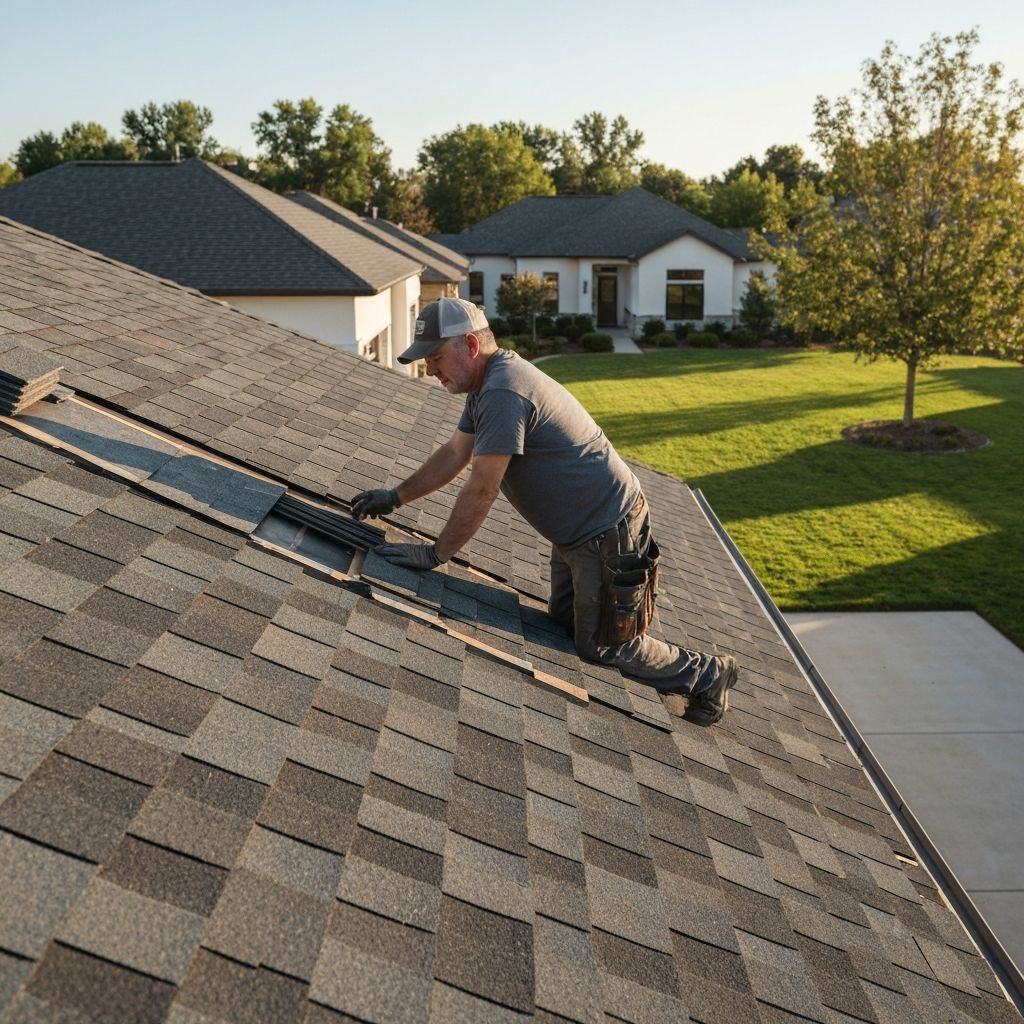
7 Signs Your Roof May Need Replaced
Learn the key warning signs that indicate your roof may be reaching the end of its lifespan.
1. Missing or Curling Shingles
Walk around your property and look up at your roof from ground level. Missing shingles leave your roof deck exposed to the elements, while curling shingles indicate aging materials that have lost their protective oils. Both conditions allow water to penetrate beneath the surface.
Even a few missing or curling shingles can lead to leaks, water damage to your attic and ceilings, and accelerated deterioration of surrounding materials. Addressing this early can prevent costly interior repairs.
2. Granules in Your Gutters
Check your gutters and downspouts for an accumulation of small, sand-like granules. These granules coat asphalt shingles and protect them from UV rays. Finding excessive amounts in your gutters, especially after rain, indicates your shingles are wearing out.
Granule loss exposes the asphalt layer to direct sunlight, accelerating aging and reducing your roof's ability to protect your home. A roof losing granules rapidly may only have a few years of life remaining.
3. Daylight Through Roof Boards
Go into your attic during the day and look up at the underside of your roof. If you can see daylight streaming through the boards, you have gaps or holes that need immediate attention.
If light can get in, so can rain, snow, and pests. Visible daylight indicates structural gaps that compromise your home's envelope and can lead to significant water damage, mold growth, and energy loss.
4. Sagging Roof Deck
Look at your roofline from the street. A healthy roof should have straight, level lines. If you notice areas that appear to sag, dip, or bow, the underlying roof deck may be weakened by moisture damage or structural issues.
A sagging roof is a structural concern that only worsens with time. The added weight of rain, snow, or debris can accelerate the problem and potentially lead to a roof collapse if left unaddressed.
5. Water Stains on Interior Ceilings
Check the ceilings in your upper floor rooms and attic for brown or yellow water stains, peeling paint, or bubbling drywall. These are telltale signs that water is making its way through your roof.
Interior water stains indicate active leaks that are damaging your home's structure and can promote mold growth. By the time you see stains inside, the roof damage may already be significant.
6. Your Roof Is Over 20 Years Old
Most asphalt shingle roofs are designed to last 20-25 years under normal conditions. If your roof is approaching or has exceeded this age, it's time for a professional inspection even if you don't notice obvious problems.
Older roofs become increasingly vulnerable to weather damage and may fail suddenly. Proactive replacement allows you to plan the project on your timeline and budget rather than dealing with an emergency.
7. Higher Energy Bills
Have your heating and cooling costs increased without explanation? A failing roof may be allowing conditioned air to escape and outdoor air to infiltrate your home, making your HVAC system work harder.
Poor roof insulation and ventilation affect your entire home's energy efficiency. A new roof with proper ventilation can significantly reduce your monthly energy costs and improve indoor comfort.
Need Help With Your Roofing Project?
Our experienced team can inspect your property and provide a free, no-obligation estimate.
Related Resources
Metal Roof vs Shingles Guide
Compare the pros and cons of metal roofing versus traditional asphalt shingles for your home.
Roof Storm Damage Checklist
A comprehensive checklist to assess your roof after severe weather events.
Questions To Ask Before Hiring A Roofer
Essential questions every homeowner should ask before signing a roofing contract.